INTERNATIONAL NEWS / COMPETITION
Why the biggest deal in elevator history is sitting on a desk in Ottawa — and what it could mean for the service contract in your filing cabinet
Somewhere in your building’s office there is a contract. It says which company services your elevators, how quickly it answers a trapped-passenger call and what you pay each month. You probably signed it, filed it and forgot about it.
Now imagine the company named on that contract gets bought by its biggest rival. That is the situation facing the elevator industry in the autumn of 2026. Finland’s KONE has agreed to acquire TK Elevator, the German-born company that was once Thyssenkrupp’s elevator division. KONE’s announcement values TK Elevator at an enterprise value of €29.4 billion, including debt.
If the transaction closes, the combined company would look after more than 3.2 million elevators and escalators worldwide, employ more than 100,000 people and generate about €20.5 billion in annual sales. Roughly two-thirds would come from service and modernization — contracts like the one in your filing cabinet.
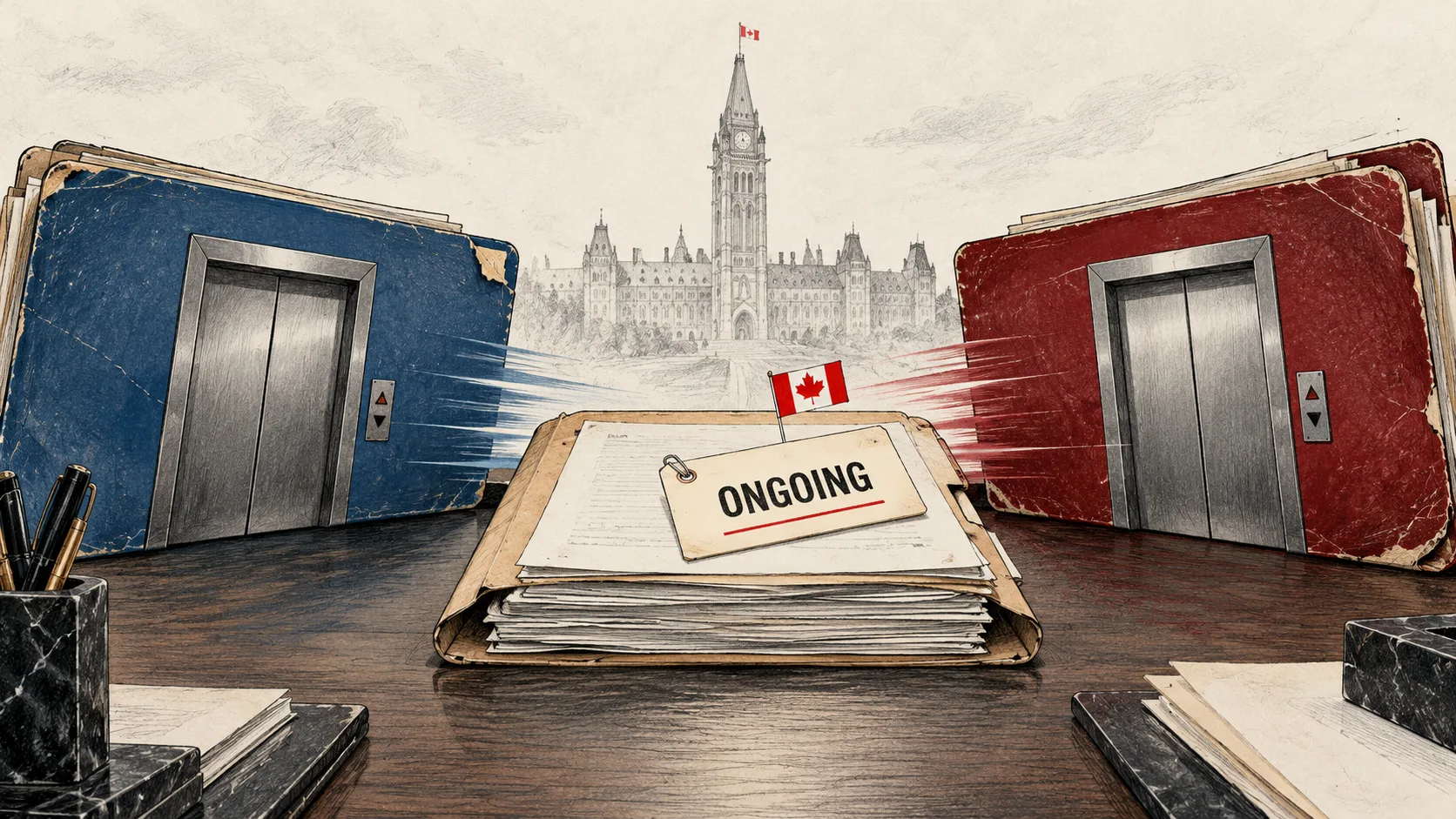
The agreement was signed on April 29, 2026. KONE shareholders approved the transaction on June 3. The remaining step is regulatory approval in the jurisdictions where competition may be affected. In Canada, the Competition Bureau’s public merger-review registry lists the transaction under the holding-company names KONE Oyj / Vertical Topco II SA and TK Elevator Topco GmbH. The review opened July 17, 2026 and is listed as ongoing.
That status is the whole Canadian story for now. The Bureau has not publicly said that the deal is a problem, and it has not cleared it. Its review process involves reading documents, counting market alternatives and consulting people who know the market.
What is the Bureau looking for?
The practical question is whether combining two major competitors could leave building owners in places such as Winnipeg, Toronto or Vancouver with fewer meaningful choices and higher service costs. The legal language is a substantial lessening or prevention of competition. Owners experience that question through renewal quotes, response times and the number of serious bidders in the room.
The Bureau’s merger-review process specifically allows it to consult customers, suppliers, competitors, industry associations and experts. It also provides a feedback form for market participants. The large companies have lawyers and economists; the form gives customers a way to explain what the market looks like from their side.
Employment is handled differently. The Bureau says the impact of a merger on jobs is outside its competition mandate. The effect on mechanics and other employees will be decided elsewhere.
What could a remedy look like?
If a regulator believes a merger goes too far, the usual outcome is a negotiated remedy rather than a courtroom drama. A consent agreement can require the companies to sell assets to another market participant. In an elevator market, that could include branches, installations or a portfolio of service contracts strong enough to remain a real competitor.
That possibility is already part of the wider regulatory story. KONE has said that remedy divestments may be necessary in some geographies to secure approval. Reuters reported on October 1 that KONE was preparing to sell most of TK Elevator’s European business as a possible remedy. Bloomberg reported on October 6 that Mitsubishi Electric and Fujitec, backed by EQT, were studying bids for those assets. Those reports concern Europe; they do not establish that Canada will require a sale.
What we know — and what we do not
TK Elevator North America told customers on May 14 that the two companies continue to operate independently, remain competitors and maintain an information barrier while approvals are pending. The letter also said existing products, installations and service contracts will continue to be supported. KONE’s April announcement says completion is expected no earlier than the second quarter of 2027, subject to regulatory approvals.
What we do not know is whether the Competition Bureau will require anything in Canada. No Canadian remedy, divestiture or Bureau position has been publicly reported in the material reviewed for this article. Anyone who says today that a particular Winnipeg branch will be sold is guessing.
Three dates to watch
- The registry: when “Ongoing” changes, the Canadian chapter has moved forward.
- The European remedy process: any sale there may show what a remedy package can include.
- Your renewal date: a contract can survive a sale while the logo on the service vehicle changes.
For now, nothing changes today. KONE and TK Elevator remain independent competitors, your existing contract remains supported and the Canadian review is still open. The point of watching the file is not to predict a branch sale. It is to understand how many serious bidders will remain available when your building next chooses an elevator service company.
Sources and verification
Competition Bureau Canada — merger review process and feedback form
Competition Bureau Canada — overview of the merger review process
KONE — April 29, 2026 transaction announcement
Reuters (October 1, 2026), Bloomberg (October 6, 2026) and TK Elevator North America customer correspondence (May 14, 2026) are attributed in the article where used. The European remedy reports do not establish a Canadian remedy.